How AI Chatbots Choose Sources
“An AI chatbot is not a search engine wearing a chat window.
It reads, scores, and cross checks sources before it ever writes a sentence.
Ranking first on Google barely moves the needle anymore.
Every engine, ChatGPT, Perplexity, Gemini, weighs sources differently.
Here is what actually earns a citation in 2026, and what does not.
”
AI chatbots choose sources by scoring how authoritative, current, and fact-dense a page is, then cross-checking that page against several other sources before writing an answer. Ranking position barely factors in. A 2026 analysis of AI citations found that most sources chosen by AI Overviews never crack the traditional top ten organic results at all.
This breaks the old rule of SEO. For twenty years, the goal was to rank first. Now the goal is to be the source an AI system trusts enough to quote, even from page three.
The Four Factors That Actually Decide a Citation
Independent research groups have narrowed the guesswork down to a short list of factors with real evidence behind them.
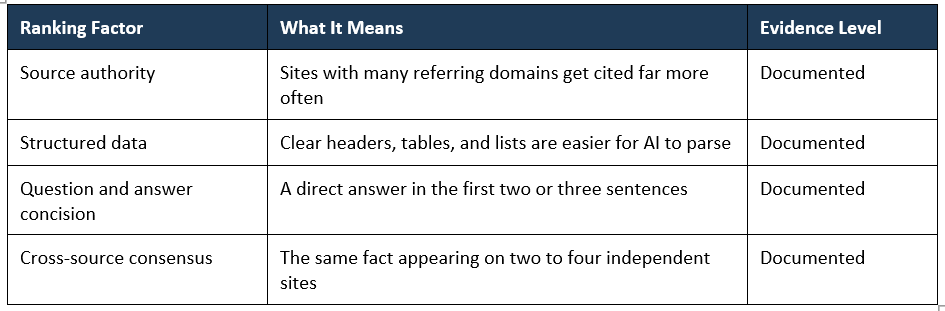
Notice what is missing from that list. Keyword density and backlink volume alone did not make the documented tier. Structure and verifiable facts did.
The 2026 Data: Every AI Engine Picks Sources Differently
Treating AI search as one audience is a mistake. A study of 680 million citations across three major engines found real, measurable differences in how each one behaves.
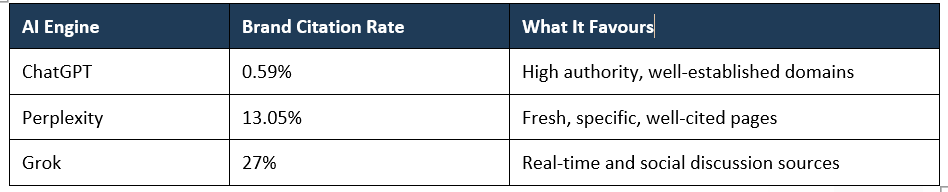
Only 11% of domains get cited by both ChatGPT and Perplexity in that same dataset. A page optimized for one engine can be functionally invisible to another, which means a single generic content strategy is no longer enough.
Why Ranking First on Google No Longer Guarantees a Citation
The overlap between page one rankings and AI citations has been shrinking fast. Different trackers land on different exact numbers, but they all point the same direction.
• Some 2026 studies put the overlap between top ten rankings and AI citations at well under half, down from roughly three in four a year earlier.
• One analysis found 88% of Google AI Mode citations come from pages outside the organic top ten entirely.
• Ahrefs and BrightEdge each independently measured the same shrinking overlap, landing between 17% and 38% depending on methodology.
The takeaway is not that rankings stopped mattering. It is that they stopped being sufficient on their own. An AI system re-evaluates a page against its own criteria every time it builds an answer, and that criteria is not identical to Google's.
What Fact Density Actually Means
Researchers at Princeton coined the term fact density to describe why some lower ranked pages still get cited over higher ranked competitors. Content that is packed with verifiable, specific detail simply gives an AI system more to work with.
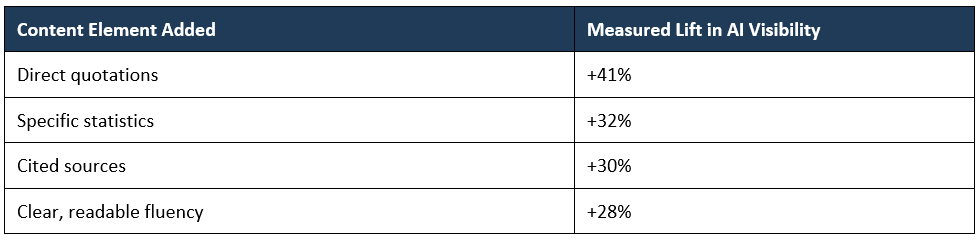
A vague sentence like many businesses report growth gives an AI system nothing to extract. A specific line like 74% of businesses reported revenue growth in the first year gives it an anchor. That difference alone can boost a lower ranked page's visibility in AI answers by as much as 40%.
Why Earned Media and Reddit Now Outrank Brand Pages
AI systems show a consistent bias toward third party, earned mentions over anything a brand writes about itself. A quote in a respected publication, a detailed forum answer, or a consistent expert presence can shape a citation even without a direct link.
• Community platforms like Reddit and Quora now capture a large share of all AI citations.
• Reddit specifically has become one of the single most cited sources across major AI engines.
• A page mentioned across two to four independent, unaffiliated sites is treated as more trustworthy than one glowing page on the brand's own site.
This is a real departure from twenty years of link centric SEO logic, where owned content and backlinks did most of the work. AI systems are, in effect, asking whether anyone besides the brand itself is willing to vouch for the claim.
How to Get Chosen: A Practical Checklist
None of this requires guessing which algorithm update just happened. It requires a short list of consistent habits.
• Lead every page with a direct, extractable answer in the first two or three sentences.
• Replace vague claims with specific numbers, dates, and named sources.
• Use real headers, tables, and lists so a system can parse structure instead of prose.
• Get the same fact published or discussed on two to four independent sites, not just your own.
• Show up where the conversation already happens, including relevant forums and community threads.
• Refresh key pages regularly. Most engines favor content updated within the last six to eighteen months.
None of these steps require chasing a single algorithm. They require making a page easy for a machine to trust and quote, which is a fairly close description of what a careful human reader wants too.
The Bottom Line
AI chatbots are not black boxes making random choices. They score sources on structure, specificity, and whether other independent voices back up the same claim, and each engine weighs those signals a little differently. Brands that keep optimizing purely for rank position are solving yesterday's problem. The ones building dense, quotable, independently verified content are the ones showing up inside the answer itself.
Ready to become a source AI actually trusts?
Audit your top pages for fact density and structure this week, then check whether anyone besides you is saying the same thing. That second voice is often the missing piece.
Frequently Asked Questions
How do AI chatbots decide which sources to cite?
AI chatbots score sources on authority, content freshness, structural clarity, and whether the same fact appears across multiple independent sites. The page is then cross checked against several other sources before the chatbot writes its answer.
Does ranking first on Google guarantee a citation from ChatGPT?
No. Recent research shows the large majority of AI citations now come from pages outside the traditional top ten organic results, so ranking position alone is no longer a reliable predictor of getting cited.
What is fact density and why does it matter for AI citations?
Fact density refers to how many specific, verifiable details a page includes, such as statistics, direct quotes, and cited sources. Research has found that increasing fact density can lift a lower ranked page's visibility in AI answers by up to 40%.
Why do ChatGPT and Perplexity cite different sources for the same question?
Each AI engine uses its own retrieval and scoring process. Studies show only a small share of domains get cited by both ChatGPT and Perplexity, since one favors established authority while the other leans toward fresh, specific, well cited pages.
How can a brand improve its chances of being cited by AI search?
Lead with a direct answer, use specific numbers instead of vague claims, structure content with clear headers and tables, and earn mentions on independent third party sites rather than relying on owned content alone.