How I Built a Page-One Content System Inside an AI SaaS Company — From Zero Infrastructure to 8 Rankings
“This system came out of necessity. I joined Wavel AI with no existing SEO infrastructure, no content team, and a brief to build organic growth from scratch. Within 18 months it produced 250% traffic growth and 20,000+ monthly impressions. These 8 rankings aren’t the point — they’re proof that the system works across niches, intents, and industries.”
“What follows isn’t tips. It’s the exact decision framework I run on every piece — the same one I’d implement on day one in any content role.”
Not "tips". Not "best practices". The actual system I used — step by step
Let me be straight with you.
I didn't stumble into these rankings.
I didn't write more blogs, chase trends, or stuff keywords into paragraphs and pray.
I cracked something most content people get completely wrong — and once I saw it, I couldn't unsee it.
Page one isn't a writing problem. It's a thinking problem.
Search engines have one job: give the searcher the best answer, fast. That's it. Everything else — keywords, backlinks, meta tags — is secondary to that one goal.
The moment I stopped asking "how do I rank?" and started asking "what would make this searcher stop searching?"... things clicked.
Here's what happened next.
8 Keywords. 8 Page-One Rankings. All Different Niches
Before I show you the system, here's what I actually ranked for:
| Keyword | Position |
|---|---|
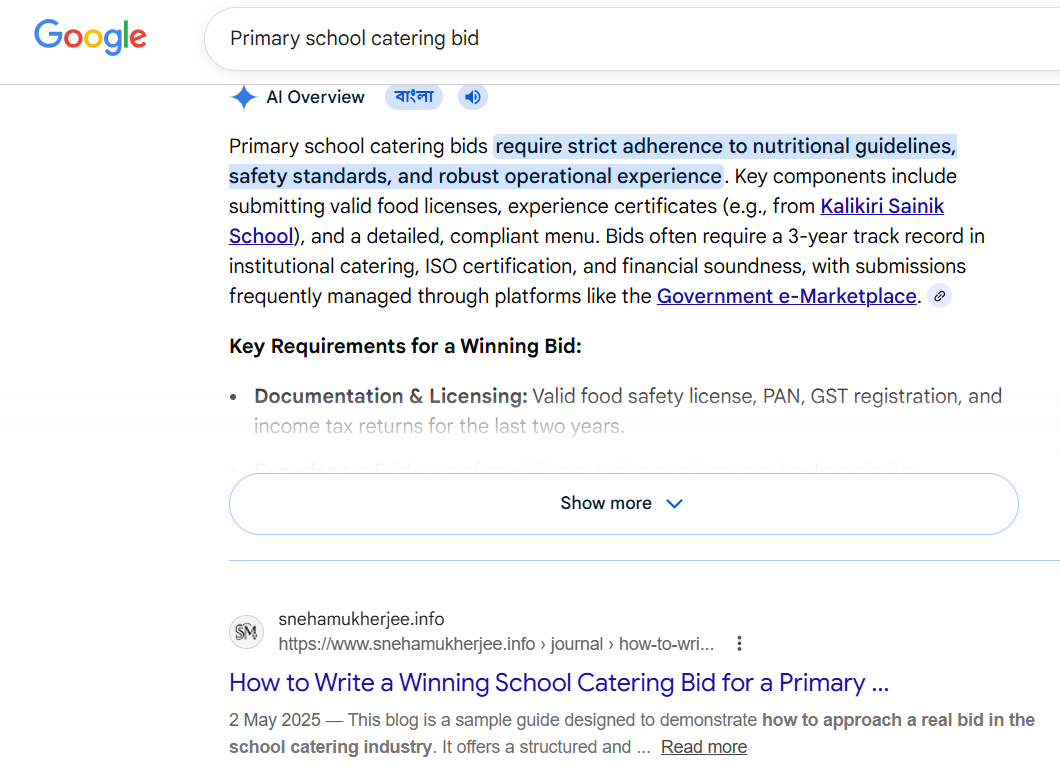
| Primary school catering bid | Rank 1 |
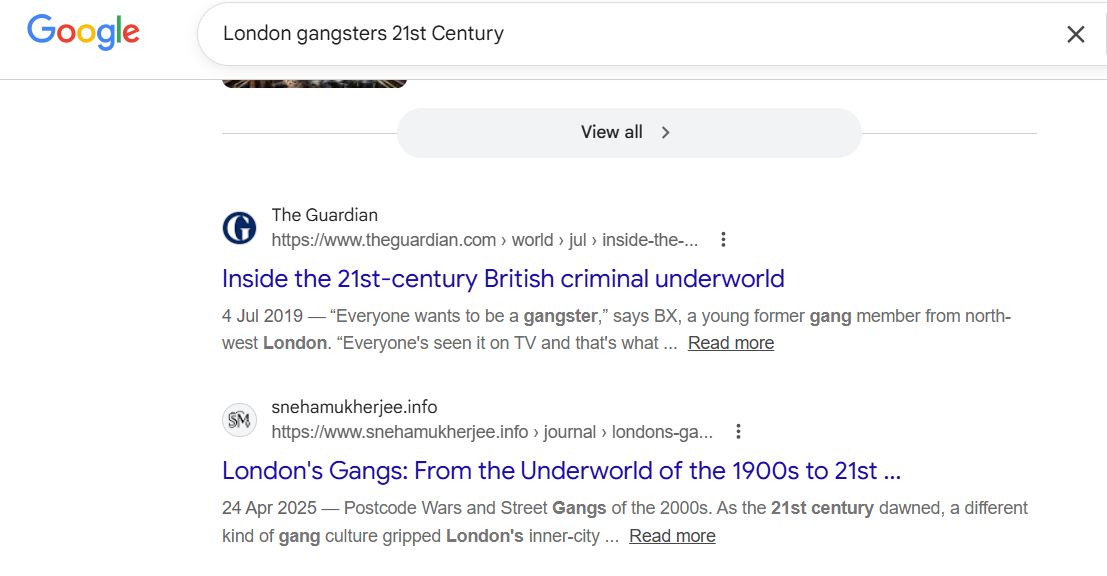
| London gangsters 21st Century | Rank 2 |
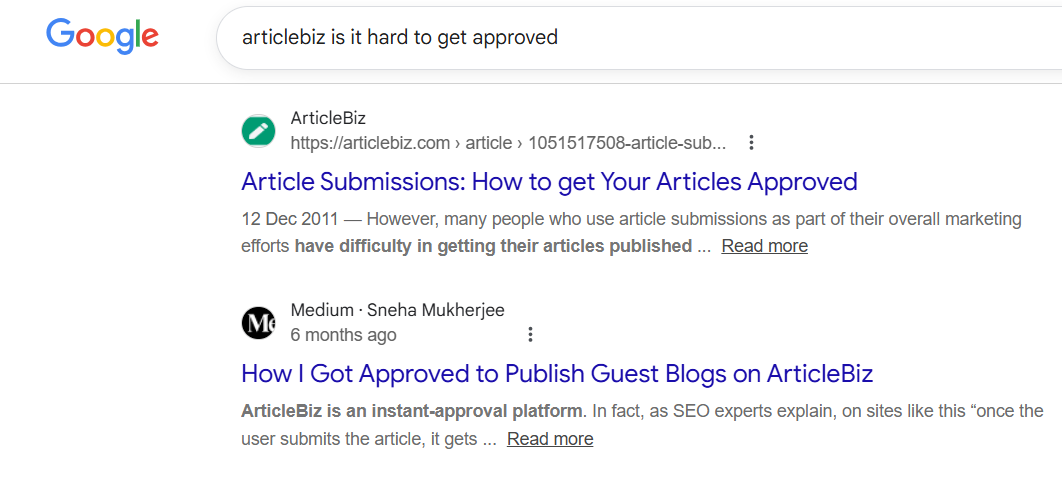
| articlebiz is it hard to get approved | Rank 2 |
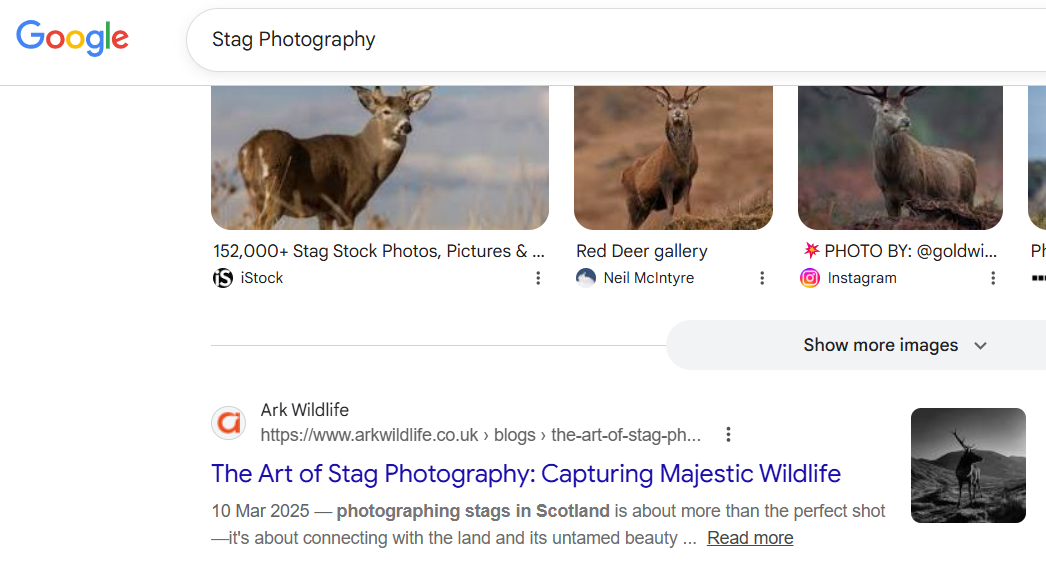
| Stag Photography | Rank 1 |
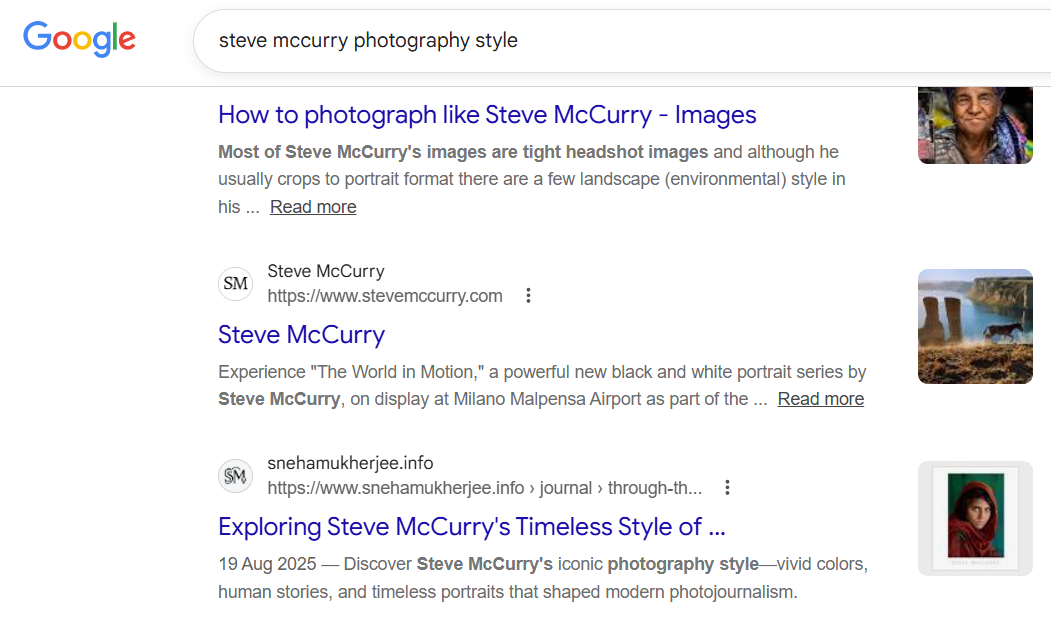
| steve mccurry photography style | Rank 3 |
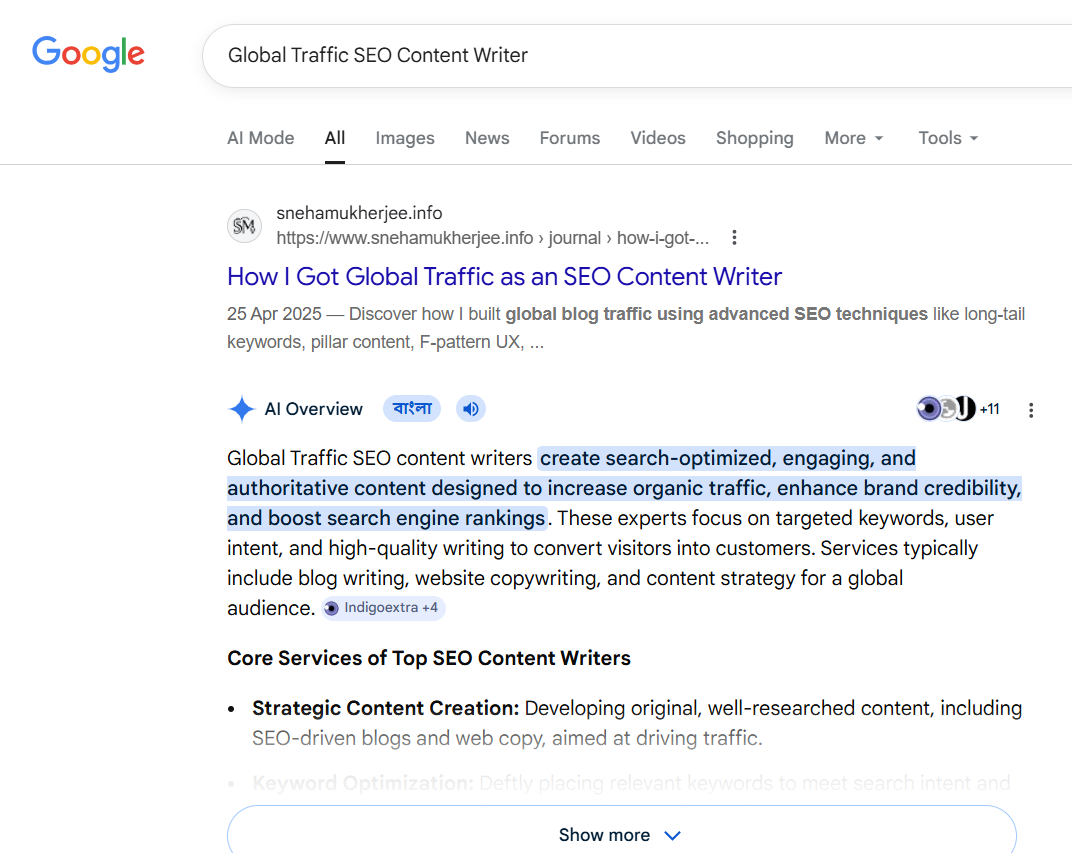
| Global Traffic SEO Content Writer | Rank 1 |
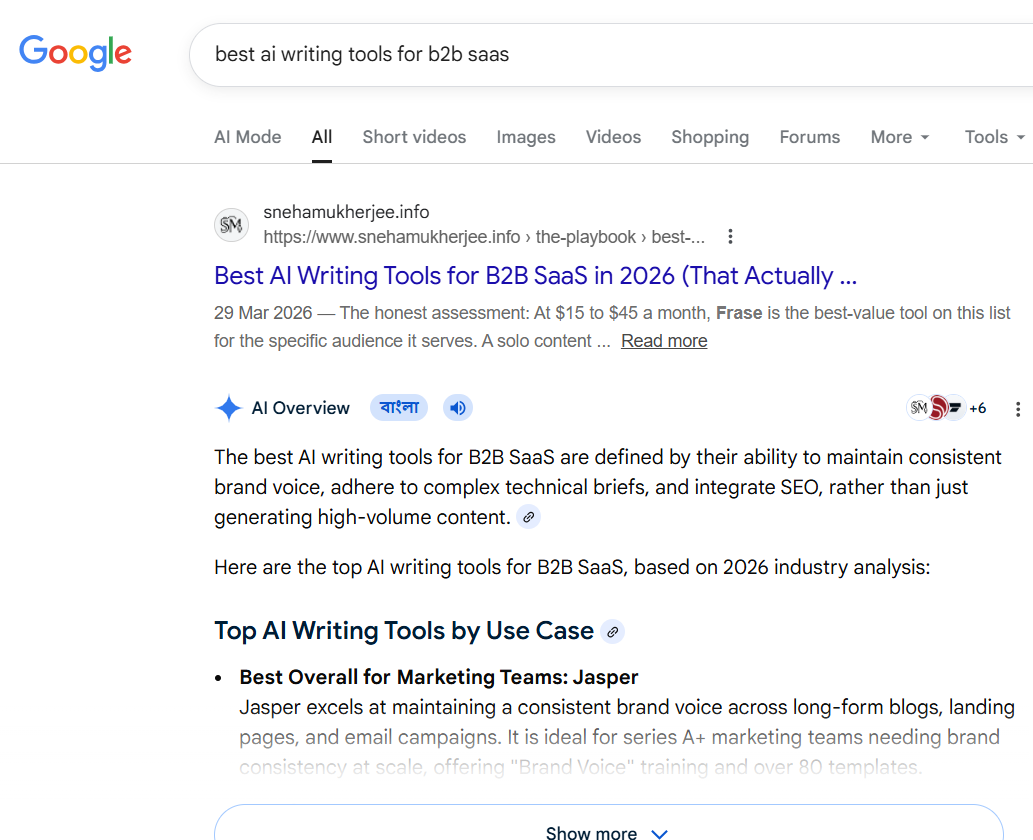
| best ai writing tools for b2b saas | Rank 1 |
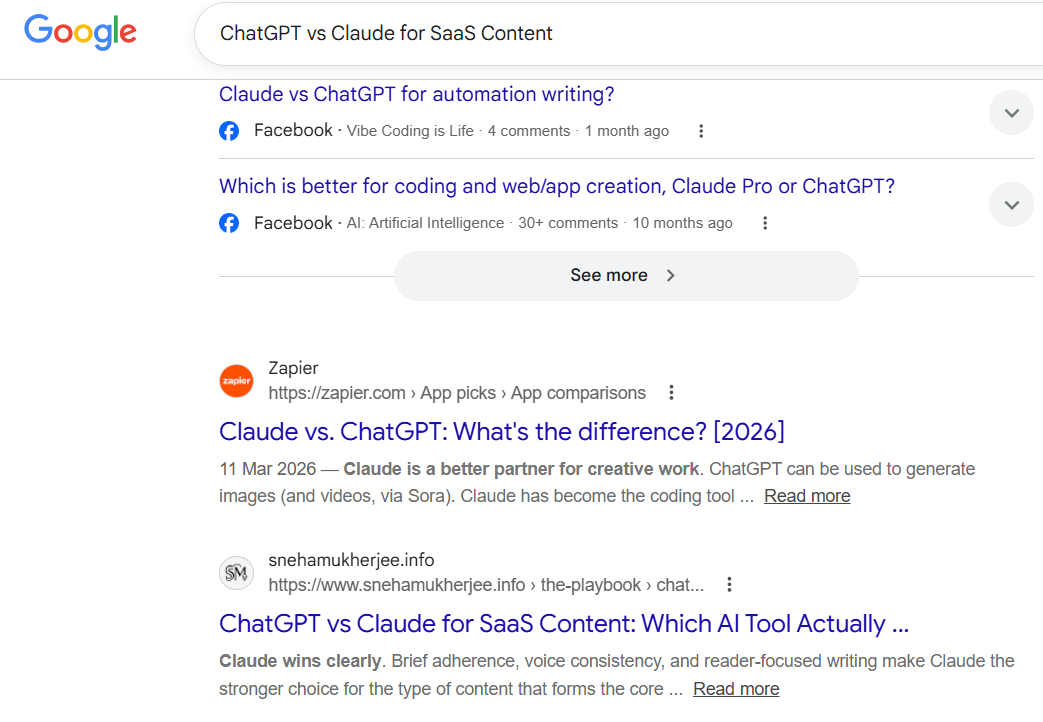
| ChatGPT vs Claude for SaaS Content | Rank 2 |
Different topics. Different intents. Different audiences.
Same system every single time.
The One Question That Changed Everything
Every time I sat down to write, I asked myself one brutal question:
"What would make this searcher say 'yes, that's exactly what I needed' — and close the tab?"
Not "is this well-written?" Not "is it long enough?" Not "did I use the keyword enough times?"
Just: does this fully satisfy what the person actually came here for?
That question alone eliminated about 80% of the garbage most content people produce.
How I Think About Intent (And Why Most People Get It Wrong)
Here's the mistake I see everywhere: people match the keyword but miss the intent.
Someone searching "primary school catering bid" isn't looking for a definition of catering tenders. They want to win a contract. Right now. Today.
So I didn't write an explainer. I built a tender-response template — the exact sections a buyer scores, mapped to official procurement guidance. I gave them a tool, not a lesson.
Someone searching "steve mccurry photography style" doesn't want a Wikipedia bio. They want to understand the technique so they can apply it to their own work.
So I didn't summarise his career. I broke down his style into components — colour, composition, storytelling — and added exercises they could practice.
See the difference?
The keyword tells you the topic. The intent tells you the job. Your content has to do the job.
The 7-Step System I Run on Every Single Piece
Step 1: Pick a keyword I can actually win
Not the biggest keyword. The most winnable one where I can produce something genuinely better than what's already ranking.
I ask: is this query specific enough that one great page can fully answer it? If yes, I'm in.
Step 2: Decode the real intent
I look at what's ranking and ask: what job is this searcher trying to do? What does "fully satisfied" look like for them?
I write that answer in one sentence before I write a single word of the page.
Step 3: Build the structure before I write
I design the H1–H4 skeleton first. Why? Because people don't read pages — they scan them. If your structure doesn't communicate value in 5 seconds, you've already lost them.
Every heading should make sense on its own, out of context.
Step 4: Add something no one else will
This is the difference between a page that ranks and a page that ranks and stays ranked.
I ask: what can I add here that competitors can't or won't? Usually it's one of these:
A real template or checklist they can use immediately
First-hand experience or a specific example
A decision framework that removes friction
Primary source references that add credibility
For the school catering bid post, it was a compliance-mapped tender checklist. For the AI tools post, it was a SaaS-specific decision framework with quality guardrails. For the McCurry post, it was actionable exercises pulled from his own stated approach.
One asset. Real value. Every time.
Step 5: On-page basics that actually matter
I keep this simple:
Core keyword in the title, H1, and early in the body — without stuffing
Title written like ad copy: clear benefit, no cleverness for its own sake
Meta description written as a pitch — short, specific, tells them what they get
Internal links with descriptive anchor text so search engines understand the relationship between pages
Schema only where it genuinely fits
Nothing exotic. Just clean execution.
Step 6: Don't sabotage good content with bad technical decisions
Fast page. Mobile-readable. Crawlable structure. Descriptive internal links so Google can actually find and understand the page.
I'm not obsessing over Core Web Vitals. But I'm not handing Google an excuse to ignore me either.
Step 7: Measure, then iterate
Publishing is not the finish line. It's the starting gun.
I check Search Console weekly — clicks, impressions, CTR, average position. If the CTR is low, I test a new title or meta. If rankings plateau, I look at what sections are weak or missing. If a competitor overtakes me, I figure out why and improve.
Most people publish and forget. I publish and watch.
What Each Win Actually Looked Like
Primary school catering bid — Rank 1
The searcher wants to win a contract. I built the page like a bid-writing toolkit — compliance sections, costing framework, menu guidance, safeguarding, KPIs, and a copy-paste tender checklist. I mapped every section to official UK school buying standards. It wasn't a blog post. It was a decision engine.
London gangsters 21st Century — Rank 2
Sensitive topic. The temptation is to go sensational. I went the opposite direction — structured, credible, sourced. Timeline of key developments. Official crime context. A "myths vs reality" section that kept people on the page. No glorification. Just rigorous information.
articlebiz is it hard to get approved — Rank 2
Half the searchers want an honest answer. The other half want to fix their rejection. I gave both. Answer-first in the opening paragraph. Then exact rejection reasons, fixes, and a step-by-step approval checklist built directly from the platform's own submission guidance.
Stag Photography — Rank 1
First problem: "stag" is ambiguous — wildlife or bachelor party? I killed that confusion in the first paragraph. Then I built a practical field guide: quick settings up top for scanners, scenario-based sections (dawn light, backlight, rain), and an ethics module grounded in conservation guidance. That ethics section wasn't fluff — it built trust and reduced bounce.
Steve McCurry photography style — Rank 3
I didn't write the bio. I wrote the breakdown. Colour approach. Composition patterns. Subject and emotion. His own stated philosophy about finding the unguarded moment — then exercises that let the reader practice it. Style analysis, not biography.
Global Traffic SEO Content Writer — Rank 1
Transactional intent. The searcher wants to hire or evaluate. So I built it like a landing page wearing a guide's clothes — process, proof, deliverables, clear CTA. Every section answered a buyer's question before they could ask it.
Best AI writing tools for B2B SaaS — Rank 1
I led with criteria, not tools. Why? Because the searcher doesn't know which tool they need yet. They need a decision framework first. I gave them that — SaaS workflow-specific criteria, a shortlist mapped to use cases, and quality guardrails for AI-assisted content. Decision clarity before product names.
ChatGPT vs Claude for SaaS Content — Rank 2
Not a feature comparison. A use-case decision tree. Briefs. SEO pages. Product education. Brand voice. I mapped each use case to the right tool and told them exactly when to switch. A scorecard they could copy and use immediately.
The Pattern Across All 8
Go back and look at those wins. Here's what they all have in common:
I matched the job, not just the topic. Every page does something specific for the searcher — wins a bid, explains a technique, helps them decide, gets them approved.
I built one real asset per page. A checklist, a template, a decision tree, a framework. Something they couldn't get from a summary.
Structure came before writing. Every page was designed to communicate value to a scanner before it was written for a reader.
I used credible primary sources. Official guidance, platform documentation, primary portfolios. Not vibes. Not opinions without backing.
I treated the title and meta like ad copy. Click-through rate is part of the ranking signal. A page no one clicks on doesn't stay ranked.
The 90-Day Plan I'd Run If I Were Starting From Scratch
Days 1–14: Foundation
Technical audit — fix anything that stops Google from crawling or indexing correctly
Set up Search Console and analytics event tracking properly
Map 8 target keywords with intent categories written out in one sentence each
Days 15–28: Outlines
Build H1–H4 structure for each page — no writing yet
Identify the one unique asset each page will contain
Write two title variants and one meta for each
Days 29–60: Create and publish
Write, add proof, QA structure against the intent statement
Publish with internal links connecting related pages
Submit sitemap; run URL inspection to confirm indexing
Days 61–75: Optimise
Check CTR in Search Console — test the underperforming titles
Find the pages where users are dropping early and improve the opening section
Days 76–90: Scale
Build supporting pages around the strongest performers
Strengthen internal linking between hub and support pages
Refresh the top 3 performers with new examples and sharper sections
What To Do Right Now
Pick one keyword. One.
Write the "fully satisfied" success condition in a single sentence. Build the H1–H4 skeleton. Identify the one asset that makes this page genuinely more useful than anything ranking today.
Then publish it within 7 days.
Don't revise your content strategy. Don't build a spreadsheet. Don't spend three weeks on keyword research.
Ship the page. Measure. Improve.
That's the whole game.
Eight page-one rankings. One system. Now it's yours.